Strong Nearly Killed Me..
“Strong” Nearly Killed Me: A Black Woman on Mental Health, Stigma, and Surviving Our Silence
They call us strong. Magical. Resilient. I used to wear those words like armor until the armor got too heavy and I collapsed inside it.
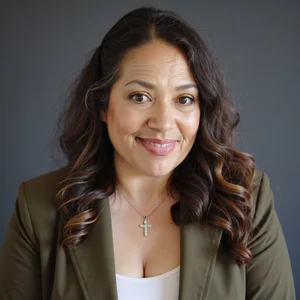
I’m a 51-year-old Black woman with bipolar disorder. I wasn’t diagnosed until my early 30s. For decades I thought my highs were ambition and my lows were weakness. That’s what we’re taught. You don’t get depressed. You get busy. You don’t get therapy. You get Jesus, or wine, or another job, or another man, or you just “keep it moving.”
In my world, mental illness had names: “touched,” “nervous,” “going through something.” Nobody said depression. Nobody said psychiatrist. People slept for days and we said she was “tired from working two jobs.” I have known people to talk to people who weren’t there and we said she was “blessed with the spirit.” We self-medicated with church on Sunday, Hennessy on Friday, and silence every day in between.
When I finally crashed in 2023 — lost the apartment, lost the relationship, slept in my car — Black folks I knew had advice. “Pray harder.” “You’re too smart to be depressed.” “Therapy is for white people.” “What happens in this house stays in this house.” One woman told me meds would “make me a zombie.” Another said, “We don’t air our business to strangers.”
The stranger I finally aired my business to was a psychiatrist. She was Black. She didn’t flinch when I said “mania.” She didn’t tell me to pray it away. She said, “Trileptal.” And for the first time in 49 years, my brain got quiet.
The stigma is not just ignorance. It’s history. It’s Tuskegee. It’s being misdiagnosed because doctors don’t believe Black pain. It’s watching your mama be called “aggressive” when she was anxious. It’s watching someone get a jail cell instead of a treatment plan. We learned not to trust systems, so we created our own. But sometimes our own systems are killing us.
Here’s what I didn’t know at 30: Depression in Black women doesn’t always look like crying. Sometimes it looks like snapping at your kids. Sometimes it looks like perfectionism. Sometimes it looks like sleeping with anybody who says “you’re pretty” because your brain tells you you’re worthless. Sometimes it looks like getting two degrees and still thinking you’re stupid. Sometimes it looks like “strong.”
The community will hold a repass for you before it will hold space for your breakdown. We will plan your funeral better than we plan your wellness. I’m trying to change that in my own life, starting with language. I don’t say “I’m going through something” anymore. I say “I’m bipolar and today is hard.” I don’t say “I’m just tired.” I say “My meds need adjusting.” I don’t whisper “therapist” like it’s a dirty word. I say it like I say “dentist.”
I’m starting a Ph.D. next month in Philosophy of Education. I want to study how we teach Black women that their minds are worthy of care. Because education saved me twice: once when I learned what bipolar disorder actually was, and again when I realized I wasn’t the only one.
I’m not “cured.” I’m treated. I’m stable. I’m still unlearning 50 years of stigma. But I’m done performing strength for people who would rather see me die than see me medicated.
To every Black woman reading this who’s been called “too much,” “angry,” “dramatic,” or “strong” when you were actually sick: You are not a spiritual failure. You are not a stereotype. You are not alone.
Get the help. Take the pill. Fire the friend who says “just pray.” You deserve a brain that doesn’t feel like a battleground.
We survive everything. It’s time we learned how to live.