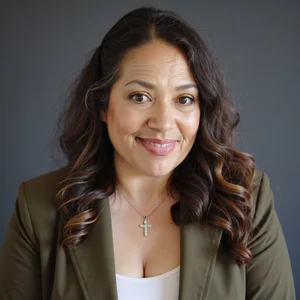
My father
My Father, the Black Officer in Eugene — and What Outsiders Don’t Know About Oregon
My father was a Black police officer in Eugene, Oregon in the 70s.
Not that many men of color were officers back then. Oregon wasn’t Los Angeles. It wasn’t Chicago. It was Eugene. And in Eugene in the 70s, a Black man in uniform meant something. It meant walking into rooms where you were the only one. It meant carrying the badge and carrying the weight.
I carry that weight now.
When I walked into the Lane County Circuit Court years later, I saw white faces from years of serving. Plaques. Portraits. History. But very few African American folks. I remember walking in the court waiting area saying, “Where are the Black people?” And then, half-joking, “At least can I see a photo of Obama or Harris?”
Kinda funny I’m a Harris, but also a Murray.
People laughed at me when I said my normal “Lord have mercy.” They didn’t know I was serious. They didn’t know I was looking for a reflection. For proof that I belonged in that building. That my father’s service meant something. That I wasn’t crazy for expecting to see someone who looked like me in a place that decides justice.
What outsiders don’t know about Oregon is the underground railroad that exists — and the history of systematic racism that exists.
People think Oregon is all Portland coffee shops and Eugene hippies. They don’t know about the exclusion laws. They don’t know Black people were banned from living here by the state constitution until 1926. They don’t know there are still some pockets or back roads that minorities should not go into at night. Think sundown.
Think sundown towns. Think roads my father had to drive as a cop, knowing the badge protected him but didn’t erase his skin. Think the sheriff being kind — and me being grateful for basic decency because I know it’s not guaranteed.
My father put on that uniform in a state that didn’t always want him in it. He served anyway. He walked into courtrooms where there were no photos of Black men on the wall. He made a path so I could walk in decades later and ask out loud, “Where are the Black people?”
Oregon gave me foundation. Oregon also gave me caution. Oregon gave me my father’s legacy and it gave me the knowledge that racism here isn’t loud — it’s systemic. It’s in the absence. In the courtroom walls. In the back roads. In the laughter when a Black woman says “Lord have mercy” and people think it’s a punchline.
I’m a Harris and a Murray. I’m my father’s daughter. I’m a U.S. citizen who votes. I’m a butterfly who came from ashes.
And I still walk into rooms counting faces.
Because someone has to. Because my father did. Because if we don’t say “where are the Black people,” Oregon will keep pretending it doesn’t know what we mean.
Cathryn M. Murray
Daughter of an Eugene Officer | Juror | Oregon Born
Salem, Oregon | August 1, 2026