Being the Face
Being the Face: What I Learned From Photographers, Makeup Artists, and a Throwaway Camera
I never mastered makeup the way makeup artists do. I can do my own face for real life, but put me in front of a lens and I hand it over. That’s the first thing you learn as a talent: you are not the expert of you. Not always.
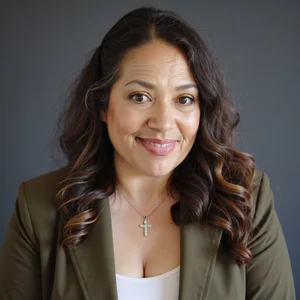
I’m a 51-year-old biracial woman. My hair is its own country. It takes a hair person to get my hair straight with curls — bone straight at the root, soft bend at the ends, the kind of “effortless” that takes two hours, three products, and a professional who doesn’t flinch when I say “it used to do this on its own.” I stopped fighting that. I stopped pretending I could replicate it in my bathroom at 6am. The magic isn’t in my hands. It’s in theirs.
Working with photographers and makeup artists taught me to surrender control and pay attention.
The makeup chair is where you learn your face is a landscape, not a mask. I’d sit there and watch them work. The way they map bone structure. The way they mix foundation on the back of their hand like paint. I never mastered that. My everyday “beat” is tinted moisturizer and maybe mascara if I remember. But in their chair, I learned what light does to cheekbones. I learned that what looks heavy in person reads clean on camera. I learned to stop sucking in my cheeks and trust the contour.
Photographers taught me my body in stillness. You think you know your angles until someone puts you on seamless and says “chin down, eyes up” for three hours. I learned my best angles by studying photos on Polaroid, film, and throwaway cameras.
Polaroids don’t lie. They develop in your hand, no filter, no Facetune. You see exactly how your smile goes crooked when you’re nervous. You see that your “good side” is actually just the side with less shadow. I’d spread them out on the floor after a shoot and study them like homework. Head tilt too far, I look confused. Shoulders up, I look scared. Chin too high, I look arrogant. Chin just right, eyes direct — there I am.
Film taught me patience. You don’t get to check the back of the camera. You have to trust the photographer, trust yourself, trust that the moment happened. Some of my favorite shots are the ones between poses — me laughing, adjusting an earring, caught exhaling. Throwaway cameras taught me freedom. At $7 a pop, you stop posing and start living. The grain, the light leaks, the bad crop — that’s where I found out I was prettiest when I forgot to be pretty.
Working as talent is not about being the most beautiful person in the room. It’s about being the most available person in the room. Available to light. Available to direction. Available to your own face changing in a decade. My angles changed. Gravity joined the team. But the lesson didn’t: you collaborate.
The makeup artist sees what I don’t. The photographer frames what I can’t. The hair person makes peace with what I inherited. And me? My job is to show up without apology, know what light loves on me, and let the team do what they do.
I never mastered makeup the way makeup artists have. I never will. But I mastered something else: knowing when to hand over the brush. Knowing that beauty isn’t a solo act. It’s a crew, a Polaroid, a bad throwaway shot that still catches your truth, and the guts to look at all of it and say, “That’s me. Let’s go again.”